House Rabbit Community and Store

What are we about? Please read about our Forum Culture and check out the Rules.
The subject of intentional breeding or meat rabbits is prohibited. The answers provided on this board are for general guideline purposes only. The information is not intended to diagnose or treat your pet. It is your responsibility to assess the information being given and seek professional advice/second opinion from your veterinarian and/or qualified behaviorist.
› FORUM › DIET & CARE › bunnies and UV light
I was thinking about what Chewie would do during the hot summer months when it’s not feasible to take him to the park or to the beach (our flat doesn’t have ANY south- or even west-facing windows).
When I idly searched for pet UV-lamps, I came across this brief but interesting article: LINK
Has anyone tried UV lamps with their buns? If so, how did it go?
I don’t think they are necessary for the typical house bunny. There is vitamin D added to most good quality pellets and sun-cured hay contains vitamin D as well. The article doesn’t mention anything about the studies that point to the dangers of too much vitamin D. Is it assuming that these are livestock rabbits and they are not being fed a proper diet and they are kept in dark sheds?
Too much vitamin D can actually cause elevated levels of calcium in the blood. This is actually a topic that we have discussed on the forum in the past. Maybe Bam remembers what we concluded? LOL
Ah, here’s one of the articles I was thinking of.
http://www.wrs.upv.es/files/journals/vol%208_4_lebas.pdf
In the case of vitamin D deficiency, intestinal absorption of calcium and phosphorus are not modified, but renal excretion of calcium is reduced. This induces a better calcium raw balance in vitamin D deficient rabbits than in normal ones.
That’s definitely a concern.
Chewie’s on an Oxbow & fresh goodies diet, but his bunny-hugger vet strongly suggested UVB exposure for at least a couple of hours per week – she mentioned a study that compared dental and bone health in wild vs house rabbits and the wild ones beat out our little guys in the calcium absorption department by significantly more than a twitching nose.
It’s why Chew’s been getting harnessed and plays outdoors every weekend. But now I’m concerned about the blood calcium mentioned in your source. Oh dear…
LBJ, I remember the cut D discussion, but it was all about dietary vitamin D and the original poster was looking for a vegan source of city D rather than the D3 from lanoline that’s common in rabbit feed. But it does seem like UVB light is the best source of vitamin D:
This is from Medirabbit, september 2014: http://www.medirabbit.com/EN/Food/Nutrient/Vitd/VitD_results_en.pdf
How long is the really hot season in Kuwait? I’m asking because in countries with long dark winters (esp countries above the polar circle), people and a lot of pet dogs have to make do with very little sunlight for a large part of the year. The vit D you get in a Nordic summer lasts a pretty long time, but many people need to take a supplement during winter, esp people with dark skin. But our winters are really long. If the period when you can’t take Chewie outside isn’t very long he might be ok with staying indoors for that period. You could ask your vet what she thinks?
I’ll have to start taking my buns outside. Or get a UVB lamp. Have to look into that. Thank you, Q8.
Thanks, bam. Also an informative read.
It’s too hot for a bun (and most humans) for about 6 months and glorious for most of the other 6.
I’ll start scoping out UVB bulbs at the pet store and then find an IKEA lamp that fits them that I can install just above the furball’s potty.
Bam, no this was before that. Someone was asking about vitamin D deficiencies. Oh well, I’m sure we’ll get this sorted out.
Q8 – I don’t think you need to worry about too much vitamin D. Yes, high doses are not good for bunnies. But I would think that a healthy diet and occasional exposure to UV light isn’t going to push a bunny into the danger zone. What I was trying to say is that the UV bulb is probably not necessary since bunnies can cope with periods where less vitamin D is available.
I would be interested in this study. Does it just look at UV exposure? Perhaps there were other factors at play (likely in a wild bunny population).
I’ll ask her about the study, LBJ. Chewie’s seeing her next Saturday to say goodbye since she’s retiring and moving back to England. ![]()
I too would love to know more about the study, Q8! It could be so useful for all bunnies. I’m so sorry your vet is retiring and moving away=( How inconsiderate of her! (joking)
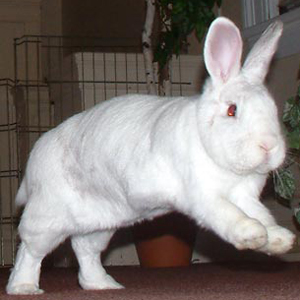
Just making sure, Chewie doesn’t have red/pink eyes? I read that pink/red eyed animals shouldn’t have UVB lamps because it could hurt their eyes. It was in an ad from a company making UVB lamps for small pets and birds, but since they want to sell their products, they wouldn’t say it was bad for redeyed pets if it wasn’t. Here’s a link to the ad: http://www.arcadia-bird.com/small-furry-pets/
LBJ; I guess I don’t remember then =(
I know! SO inconsiderate. lol
And poor Chew even tried to bribe her into staying (a whole bag of Craisins!!).
She claims to miss her grandchildren… psshh! Who does that?!
But no. Short stuff has greyish brown peepers.
I too would like to know more about this — Will talk to my rabbit savvy vet about it. My own bunny doesn’t get pellets, but she does like to sit by the window. Wonder what she fully gets through the window. (according to the article – she is missing out on B) So bunnies on pelletless diets and aren’t exposed to sun sure would be at risk for lower Vit D. Interesting subject to learn more about!
One other concern I have been told my vet that there could possibly be correlation between direct sunlight for long periods of time and glaucoma in rabbits. What is long periods I wonder? So I will ask more about that as well.
My understanding is that it’s vitamin D3 specifically – and I’m afraid that requires UVB. And UVB are extremely short wavelengths (if I remember correctly) and as such do not penetrate well. So even one layer of clear (untinted) glass is enough to block most if not all UVB. Ho hum… ![]()
Most UVB is absorbed by the ozone layer, which is a good thing. UVB damages DNA, but we need it in small doses to synthesize vitamin D3. I believe you are right, it’s shorter wavelength means that glass can stop whatever makes it through the ozone layer.
I might not have been clear before, but UV light does seem to have some other health benefits (in humans) but they seem to be indirect. That’s why I was wondering about different factors being at play here. Wild rabbits are obviously going to have different environmental factors contributing to this overall effect than house bunnies. There could be more to the story than simply UVB.
› FORUM › DIET & CARE › bunnies and UV light