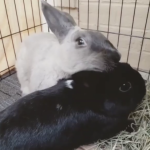
Bummer about her heart issues. :-/
Moose had terrible box habits even with being neutered and post-bonding. With him, it helped to add an extra litter box in the play area (even though it was only about 4 ft away from his main one), and to use positive rewards (pellets) for going in the box. I would make sure he took a “potty break” frequently during play times, where I would lead him to his box with a treat in hand, and reward him for both jumping in the box, and for actually using it (gotta watch for that tail to lift).
I had to watch him like a hawk at first. He would be especially prone to marking after meal times, so I would always make sure to make him take a “potty break” right after meals, and then periodically after.
Making sure the boxes had lots of fresh hay helps too.
He now has me trained, where he jumps in the box and then looks at me expectantly for his pellet, but I would much rather give him treats that clean up like 10 pee spots per day! :p He still leaves poops around, but I can live with that.
Depending on how big your space is, adding several more boxes could be the way to go (like one in each corner), and make them very enticing with fluffy bedding and lots of fresh hay.
Since she can’t be spayed, her habits will probably never be perfect, but hopefully once she passes her teen years her hormones will settle a bit, and with some training you can at least make the level of messes more tolerable.
Another thought, not sure if she’s a chewer, but I’ve been wondering if those fleece blankets that have one side of nylon waterproof backing might work well for bunnies. I think they are usually sold as picnic blankets for the beach or the park, so you can sit on wet grass without your bum getting wet. They could be nice for protecting carpet in her area. You could also use puppy pee pads underneath regular fleece to the same effect.
.
.
.
The answers provided in this discussion are for general guideline purposes only. The information is not intended to diagnose or treat your pet. Seek the advice of your veterinarian or a qualified behaviorist.



 .
.