Hi everyone,
I’ve started an actual bonding thread for my bunny Bertha (a very chill, but dominant, 6 yr old spayed female) and a new little 4 yr old neutered male (a feisty little rescue, that loves other bunnies) that we’re fostering, but I am still pre-bonding them and have a couple questions.
We brought the new guy (still to be named) home about a week ago (after they had a pretty good first speed date at the local rescue). They have been in separate pens, separated by about 4-5 inches. I let the new guy settle in for about 4 days without swapping cages. I have been pleasantly surprised that they both have seemed to retain their litter box habits (I was anticipating a line of poops along the borders of their pens, but not so!). Bertha has not seemed upset about him, and he seems to really like her (he grooms more, eats more, and get more adventurous when she is near, it’s pretty adorable).
Bertha has also taken to flopping in areas near him, which are areas where she doesn’t normally flop (see pics)! Super cute. 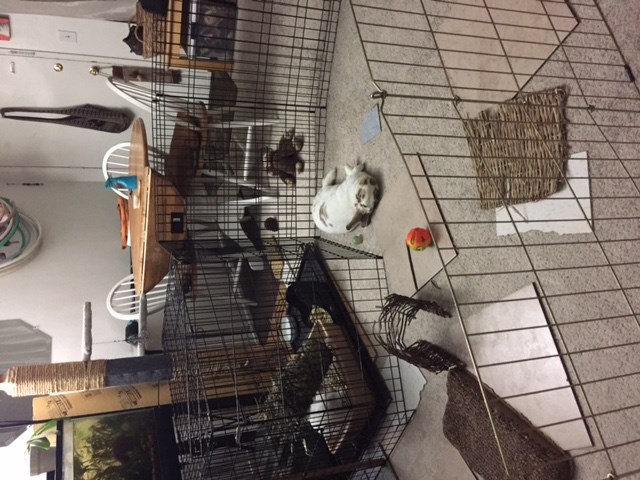
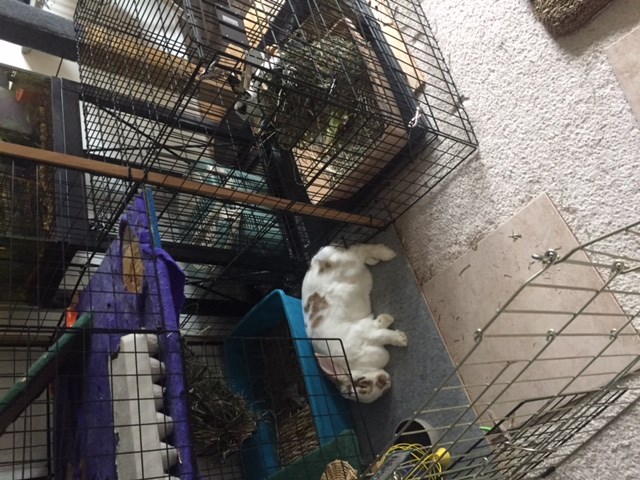
We did one cage swap for a little less than 24 hours. I had intended to do it for longer, but had to switch them back when I realized the new guy had trouble jumping down some of the levels in Bertha’s NIC condo. I also found some fur tufts which look like they were able to reach each other (I’m still not sure how, but I moved the pens further apart to be safe). I plan to modify the condo tonight and then swap them again. During that time, there was a bit of marking by Bertha, and she didn’t seem super stoked about an intruder in the condo, but she got over it pretty quick and went back to being relaxed.
This morning Bertha did some binkies near the new guy, and the new guy was pretty adventurous and seemed relaxed.
Anyway, my game plan was to continue cage swapping for about another week, then start actual bonding.
How long did everyone typically pre-bond? What types of behaviors did you look for before you knew you were ready to start bonding?
.
.
.
The answers provided in this discussion are for general guideline purposes only. The information is not intended to diagnose or treat your pet. Seek the advice of your veterinarian or a qualified behaviorist.



 .
.