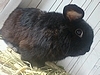
Welcome to BB! It’s so great to hear how often she gets let out of her cage, though the behaviors your describing are definitely difficult to work with.
She seems to be at the age where a spay needs to be in order. If she is not spayed yet, the behaviors may be hormonally driven, now that she’s older and those organs are more developed. With hormonal behaviors, females begin to act more on their territorial and mating instincts, so circling, defensive actions, growling, etc. can be common consequences of reacting on normal hormones coursing through her body. Morning time is probably when you feed her and let her out, so she probably has some pent up frustrations that build up from the night that she expresses once she has freedom. Again, it’s natural and shouldn’t be something you think of punishing her for.
The best course of action, not only to lessen these behaviors, but also for her health (high cancer risk for un-spayed females), is to have her spayed. She seems to be an appropriate age now. Do you have a rabbit-experienced vet you can set up a consultation visit with for the operation? It must be a rabbit-experienced vet, who has performed spays in the past with success. With an experienced vet, the risk is pretty minimal, and they’ll better prepare you for what to expect post-op.
On the attacking feet note, I always like to point out that the human body is quite large, so human feet aren’t readily associated with the loving face of a human owner. Feet are literally giant flesh monsters that seem to have no sense of direction to rabbits, and may squish them at any time. A squeal and retract can help with feet attacking, so your rabbit gets feedback that it’s a part of your body and she’s harming it. It’s like puppy play-biting; the feedback is required.
Hopefully this helps with your concerns! Feel free to ask more questions or provide more information.
The answers provided in this discussion are for general guideline purposes only. The information is not intended to diagnose or treat your pet. Seek the advice of your veterinarian or a qualified behaviorist.



 .
.