My understanding is it’s either genetic or a result of disrupted microbiome (or possibly a solid microbiome never established, such as due to early weaning or poor diet as a baby).
I had a foster bun with hotot type markings that had very severe gas and cecal dysbiosis issues. The vet suspected a genetic condition related to the innervation of the gut (cecal dysautonomia), as coloration and pattern is linked to the amount of nerves around the cecum. This is a very understudied area of rabbit medicine. In that bun’s case, his symptoms were very severe and he never returned to “normal” really. His poops were always unformed and a mess.
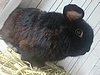
I don’t think that’s what’s necessarily going on with Nellie, but given her coloration it does make me wonder about a genetic link. Is she keeping muscle mass on? Do her poops look normal in between gas attacks?
I think if the episodes start to increase in frequency I would probably try to get some imaging done during an episode. The anesthesia required for x-rays is very light and 7.5 is not too old. I think it would also be reasonable for you to work with your vet to develop a more advanced at-home treatment plan for these attacks, since they happen a lot. Perhaps adding in sub-Q fluids or a motility med would be warranted (also check that her pain med dose is big enough).
As far as diet, I agree that checking out the pellets is a good idea. I’ve also heard that some people have good luck with incorporating more varieties of grass hay. I recall a presentation from a vet who worked with the San Diego HRS who said that they recommend feeding a blend of timothy, bermuda grass, and another hay I forget (maybe oat?). Bermuda grass is typically seen as a “low quality” hay, but perhaps that’s why it’s good for buns? The more fiber the better!
.
.
.
The answers provided in this discussion are for general guideline purposes only. The information is not intended to diagnose or treat your pet. Seek the advice of your veterinarian or a qualified behaviorist.



 .
.