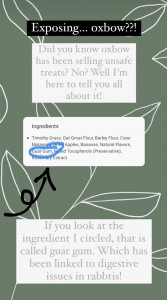
Did a bit more digging!
I also found this old thread with some great discussion about homemade treats, as well as the additives guar gum, xanthan gum, etc. https://binkybunny.com/forums/topic/ressurecting-bunny-cookies/
One study found that guar gum increased absorption and utilization of a medication in vivo (opposite of the in vitro study linked above): https://platform.almanhal.com/Files/2/39359
Another report, summarizing the effects for humans (which often involve animal studies), states:
“No acute toxicity was observed in studies in mouse, rat, rabbit and hamster at doses amounting up to 6,000–9,000 mg/kg bw per day (Stanford Research Inst., 1972; NTP, 1982; Sax, 1984).” and later on”repeated oral administration of guar gum caused some growth reduction in rats, mice and rabbits at high doses, but these effects can partially be attributed to the bulk properties of guar gum when in contact with water or intestinal juices and have not been considered as adverse effects. Increased caecum weight in animals fed high amounts (2–5% of the diet) of guar gum was also reported. ” (this is a MUCH higher dose than would be in a treat)
It also seems there is more info on the internet (all in “grey” literature though, like blog posts) about guar gum being poorly tolerated in dogs and cats. In those cases, that makes more sense to me. Dogs and cats are obligate carnivores and cannot process fiber in their diet, and “bulking agents” like guar gum are often added to canned dog and cat food to cut costs. So that would mean these animals could be eating more of these substances daily, and lacking in what they actually need (protein).
Rabbits on the other hand, NEED fiber and process it much differently than carnivores. And an occasional treat is a very tiny part of a rabbit’s diet!
So this is a long winded way of saying, I don’t think you need to worry about these treats unless your bun has a SUPER sensitive digestive tract, and I would disagree with the instagram post that they should “thrown in the bin”. And in that case, he would prob do best without commercially made treats anyway.
.
.
.
The answers provided in this discussion are for general guideline purposes only. The information is not intended to diagnose or treat your pet. Seek the advice of your veterinarian or a qualified behaviorist.



 .
.