As a first time rabbit owner, I highly recommend you go through the sections of the RABBIT INFO portion of this website to get the basics and a great overview of what you need to know and expect.
Since they are getting alfalfa hay, and if they are eating a good amount, you may be OK with just getting the young-adult Oxbow pellets, if that’s all you can find. The first ingredient in the adult pellets is timothy hay instead of alfalfa. A little calcium in the pee is all right, as rabbits naturally secrete excess calcium in the urine. If you see the pee is consistently white/cloudy/chalky/leaves a white residue, then there’s too much calcium and backing down is best.
The best diet, based on what you have now is continuing with plenty of alfalfa hay and getting either the young or adult oxbow pellets. The “recommended” transition period to no-alfalfa (i.e. no alfalfa hay or alfalfa pellets; switch to timothy pellets and a different hay, like timothy or orchard) is 6 months; however, many people transition earlier because they notice lots of calcium excreted. Alfalfa is dense in the needed resources to help a growing rabbit mature, which is why it’s the focus of their young diet, but it is inappropriate once they are older.
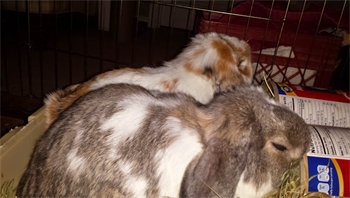
Also, I want to note that while your rabbits appear to get along currently, they have reached an age where they may become hormonal at any time, meaning the relationship may change overnight (in some cases). A pair of rabbits once cuddly and lovable may become very tense and potentially dangerous as one or both rabbits acts in a manner to either mate, assert dominance, or be territorial. Rabbits do not really acknowledge family units, so brothers and sisters will both fight and mate with each other, regardless of whether they were separated at birth or not. Also, if they are the opposite sex, pregnancy is very possible (and I will add that rabbits are often mis-sexed, so even if you were told they were FF or MM at 8 weeks old, they may actually be opposite). Please note the discussion of intentional breeding is prohibited on this forum. My recommendation would be to separate them to prevent potential pregnancy and also ensure they do not have any disputes when you are not supervising. The safest recommendation is to separate them until they are both spayed/neutered, in which case you can then begin the process of formally bonding them (see the Bonding Info in the RABBIT INFO section of the website). With them getting along well as younger rabbits, it can make the bonding process smoother (in some cases), but not always. What can hamper a future bond is if they have grudges or bad experiences with each other, like fights as a result of hormones.
The answers provided in this discussion are for general guideline purposes only. The information is not intended to diagnose or treat your pet. Seek the advice of your veterinarian or a qualified behaviorist.



 .
.

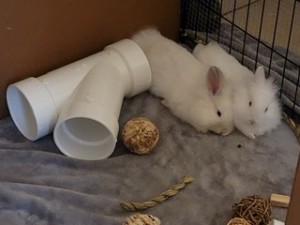 Hello, I have 2 three month old bunnies. I took them to the vet this morning as walk-ins and the line was ridiculous so we are setting up an appointment instead. I ran out of hay and pellets so I was looking forward to talking to the vet concerning the best diet. I am currently feeding them Oxbow Alfala Hay and Mezuri Timothy based pellets ( it was all I could find when I got them) I was thinking of switching to Oxbow Young rabbit pellets but I’ve been hearing that could be too much alfalfa? I have noticed a little calcium in their pee. What is the best diet for a 3 month old rabbit? First time bunny mom.