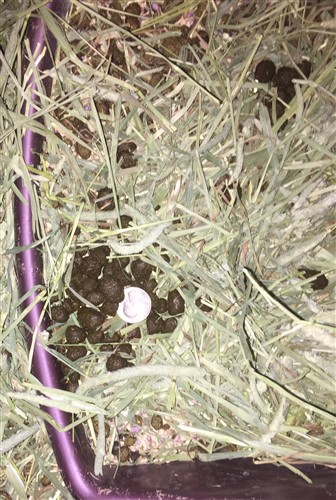
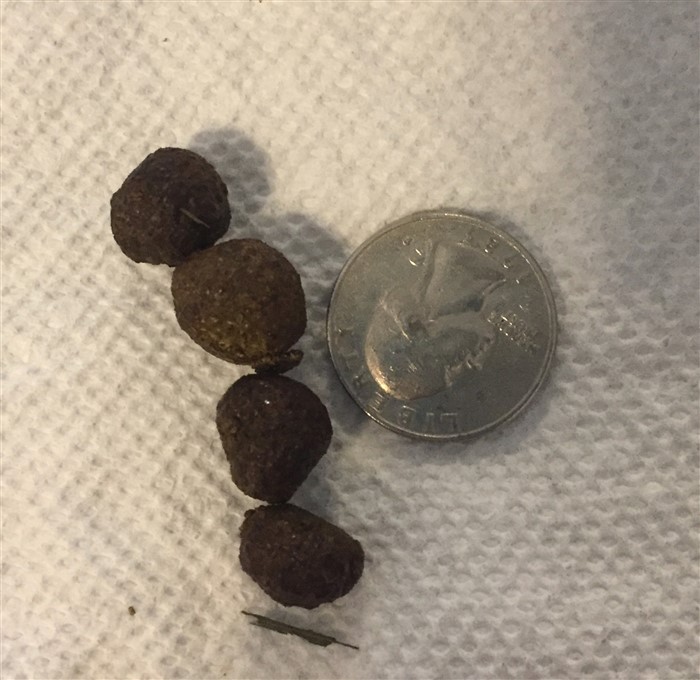
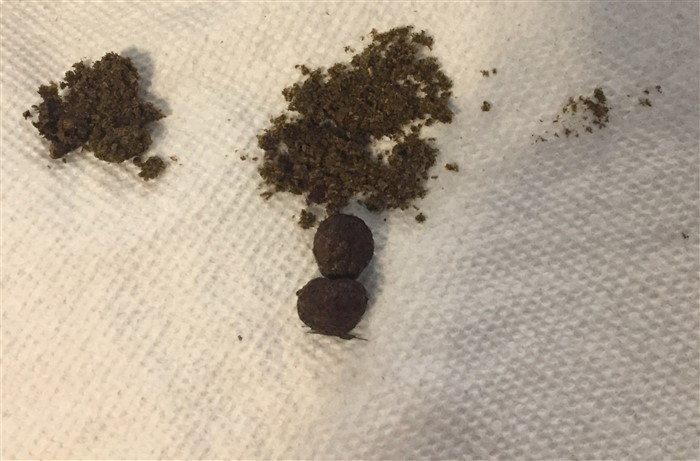
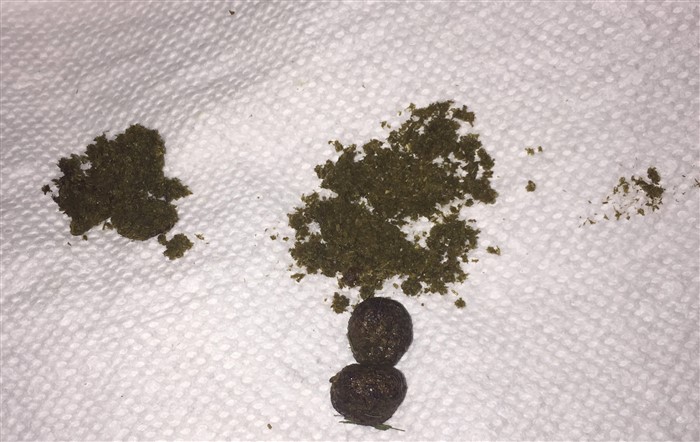
As BunnyHouse suggested, my first thought when I saw the pic was megacolon/cow pile syndrome/ cecal dysbiosis. The fact that they are fine when broken open suggests they have cecal material mixed in, rather than being “sorted” into regular fecal pellets and cecals. Also the fact that you mentioned she sometimes does occasional large poops. I fostered a bun with this issue and his poops looked exactly like that.
Cow pile/megacolon typically onsets around 3-4 years of age, but don’t panic!
How is her weight? Does she have any other symptoms of discomfort?
Cow pile/megacolon buns lose weight (specifically they lose muscle) because their cecum isn’t functioning properly, so they don’t get the nutrition they need from them. it’s interesting that she’s white with blue eyes, because the Cow pile gene is very similar to Overo lethal syndrome in horses, which is found in white blue eyed horses (but horses with this gene do not survive long after birth). (http://vgr1.com/megacolon/) In buns the gene is linked to “charlie markings”, but not found in all buns with these markings. The thinking is that the pigmentation is linked to innervation of the cecum, and buns that carry the gene do not have proper innervation of the cecum.
That said, all of this is on the cutting edge of rabbit medicine. My rescue has a bun that presents all the symptoms of megacolon, but does not have the markings. He gets daily cisapride to keep his gut moving.
The recommendations for care all involve supportive care, and especially keeping the gut very hydrated and moving. The production of those large poops can cause scarring in the gut, which then leads to problems later on. So the more hydrated and full of fiber you can keep the gut, the better.
Megacolon usually causes bouts of stasis. At this point, I would monitor closely. If she develops any other symptoms, I would consult with the vet. If she is fine in every other way (including her weight), I would just keep an eye on things. She might benefit from a probiotic if her cecal flora is a bit out of whack.
.
.
.
The answers provided in this discussion are for general guideline purposes only. The information is not intended to diagnose or treat your pet. Seek the advice of your veterinarian or a qualified behaviorist.



 .
.