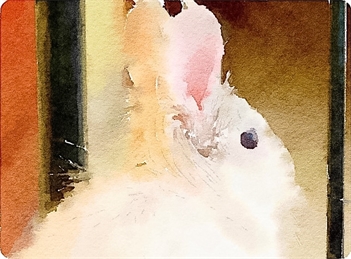
Hello everybun! As some of you know, Wick has contracted a fungal infection again. His vet is a bit perplexed about it, so we think he just may be more sensitive to it. Treatment is easy and he doesn’t become affected behaviorally– it’s just something to deal with. Fungal infection spores can live in an environment and spread forever, but most animals like dogs, cats, and rabbits grow immunity to it over time. Animals who are immune suppressed will be more susceptible to it. Wick does need a dental grinding next week, and typically when he’s uncomfortable his immune system will weaken, so it could have resurged because of that. I usually get the grinding done on the spot when we know, but Wick’s vet was booked with other surgeries that day.
I inquired about immune support supplements and Wick’s vet says it’s worth a shot to see if it helps keep the infection from latching on again. Outside this he may eventually grow resistance or it may just come up whenever he’s uncomfortable with teeth troubles (once per month).
Does anyone have any suggestions? For diet, Wick receives Timothy hay harvest stacks (Oxbow), Oxbow adult pellets, and for veggies he gets romaine. I used to give him more variety, but haven’t been since he likes romaine best. His treats are Oxbow veggie treats and for more uncomfortable tasks (I.e. receiving shots), he gets the Oxbow strawberry pieces. He also gets a splash of apple cider vinegar with the mother in his water.
Only items I will not give Wick are cucumber (makes him get wet poo) and parsley (makes him pee like a waterfall). He’s not a fan of mint in large quantities or basil in large quantities either.
If you’d like to learn more detail about Wick’s fungal infection history, see https://binkybunny.com/FORUM/tabid/54/aft/163981/Default.aspx
If you’d like to see some pictures of him, his medications, and treatment, see http://www.instagram.com/wick_theboogeyman
The answers provided in this discussion are for general guideline purposes only. The information is not intended to diagnose or treat your pet. Seek the advice of your veterinarian or a qualified behaviorist.



.