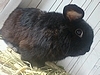
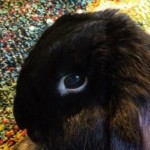
Again, educational and informative post for future reference! Some of you know Wick is currently going through treatment for his suspected tooth infection. Shots have been going well and he has his last one in two days, which was exciting for us because then he’s done treatment! Wick had fur loss on his cheeks which I suspected was from drool, but I was wrong! As usual with Wick, he always needs to be treated for something, haha.
The fur loss is a fungal infection, characterized by the “ringworm” pattern. Ringworm is not an actual worm — it denotes the pattern of fur. The fungal infection roots itself and tries to get into the hair follicles, but it can’t, so it moves out and out, creating a ring of bare fur with new fur growing in the middle. Quite nifty to see, but not attractive.
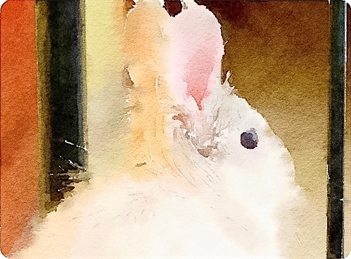
Wick gets the areas washed with a “soap” called Nolvasan. I then rinse and dry the area and glob on the entire area (focusing on the perimeter of the area, as that’s where the fungal infection active) a cream called silver sulfadiazine, aka Silvadine. It’s used by humans as well to treat burns and such. So once topical treatment is applied, Wick looks like he dunked his head into a bowl of whipped cream, haha.
As a cautionary measure, Wick is receiving a once a day oral antibiotic called itraconazole. It turns out Wick really enjoys this one, so easy administration. Wick’s vet decided to do a conservative dose on top of topical treatment because there were two affected skin patches, not just one.
I am constantly monitoring his fur for more patches, but he seems to be doing quite well. If anyone has experience with this and can offer their timeline for treatment course, that’d be appreciated! In terms of the cause, I’ve been told young rabbits have not developed antifungal skin properties yet, so it was something which happened to be in the environment.
The answers provided in this discussion are for general guideline purposes only. The information is not intended to diagnose or treat your pet. Seek the advice of your veterinarian or a qualified behaviorist.



 .
.



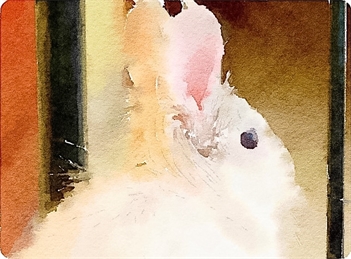
 (((Wick)))