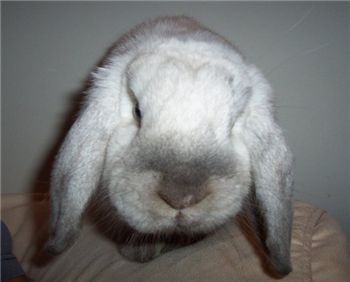
Right now I think that the most urgent thing is to get them the appropriate food. Please contact a vet or a wildlife rehabilitation person so that you can figure out what to feed a bunny at that young age. Right now, the pee is not the most urgent situation, urine is pretty sticky and hard to get out of their fur so you will probably have to let some of it grow out.
Here is some information on http://www.rabbit.org on what to feed:
GENERAL FEEDING OF ORPHANS Age + Amount (This WILL vary depending on type of rabbit.) Use KMR (Kitten Milk Replacer) for domestics and Meyenberg Goat Milk, regular not low fat for wild ones,or KMR. Add a pinch of acidophilus (AKA Probiotic capsules) to all formula to promote healthy gut flora. Other formulas vary depending on the region of the country. Avoid using Esbilac or any puppy formulas or cow’s milk. Do not add Karo syrup. FEED TWICE A DAY ONLY.
Newborn to One Week: 2 – 2+1/2 cc/ml each feeding (two feedings).
1-2 weeks: 5-7 cc/ml each feeding (two feedings).
(depending on bunny..may be much LESS if smaller rabbit).
2-3 weeks: 7-13 cc/ml each feeding (two feedings). Bunnies whose eyes are still CLOSED need to be stimulated to urinate and defecate before or after each feeding. Again, seek a professional on this. Domestic eyes open at about 10 days of age. Then start introducing them to timothy and oat hay, pellets and water (always add fresh greens for wild ones–dandelion greens, parsley, carrot tops, grated carrots, all fresh, watered down). See below for detail.
3-6 weeks: 13-15 cc/ml each feeding (two feedings–again, may be LESS depending on size of rabbit! A cottontail will take so much LESS–about half of this!.)
And here is some information on what to house them in:
Provide a soft nest area in a box with clean towels, and cover the babies (if eyes are closed) so it is dark. DO NOT provide extra heat if the room temperature is at least 65 to 70F because excessive heat can be fatal. If the room is much cooler, then you may place a heating pad on a low setting under no more than HALF of the nest so the bunny can move to a cooler area if it gets too warm.



.


 and he left to puerto rico…what should i do with these guys..they are white satin bunnies..now they look like sunny delight… they are stinky and peed everywhere im not giving it bak 2 em…he said da mother peed on dem